
For many years, whenever H5N1 avian influenza was mentioned, most people in the industry immediately thought of massive culling campaigns in chickens and ducks, farm losses, production disruptions, and growing quarantine pressure. But the picture has now changed. H5N1 is no longer just a poultry issue. It is becoming a strategic concern for the global industrial livestock sector, as the virus has demonstrated its ability to move beyond its traditional avian hosts and infect mammals, especially dairy cattle. The WHO confirmed that in 2024, the A(H5N1) virus spread to dairy herds in the United States, and several farm workers with direct exposure were also infected. WOAH has likewise stated that HPAI in cattle is an emerging concern. However, the risk to the general public remains low at this time.
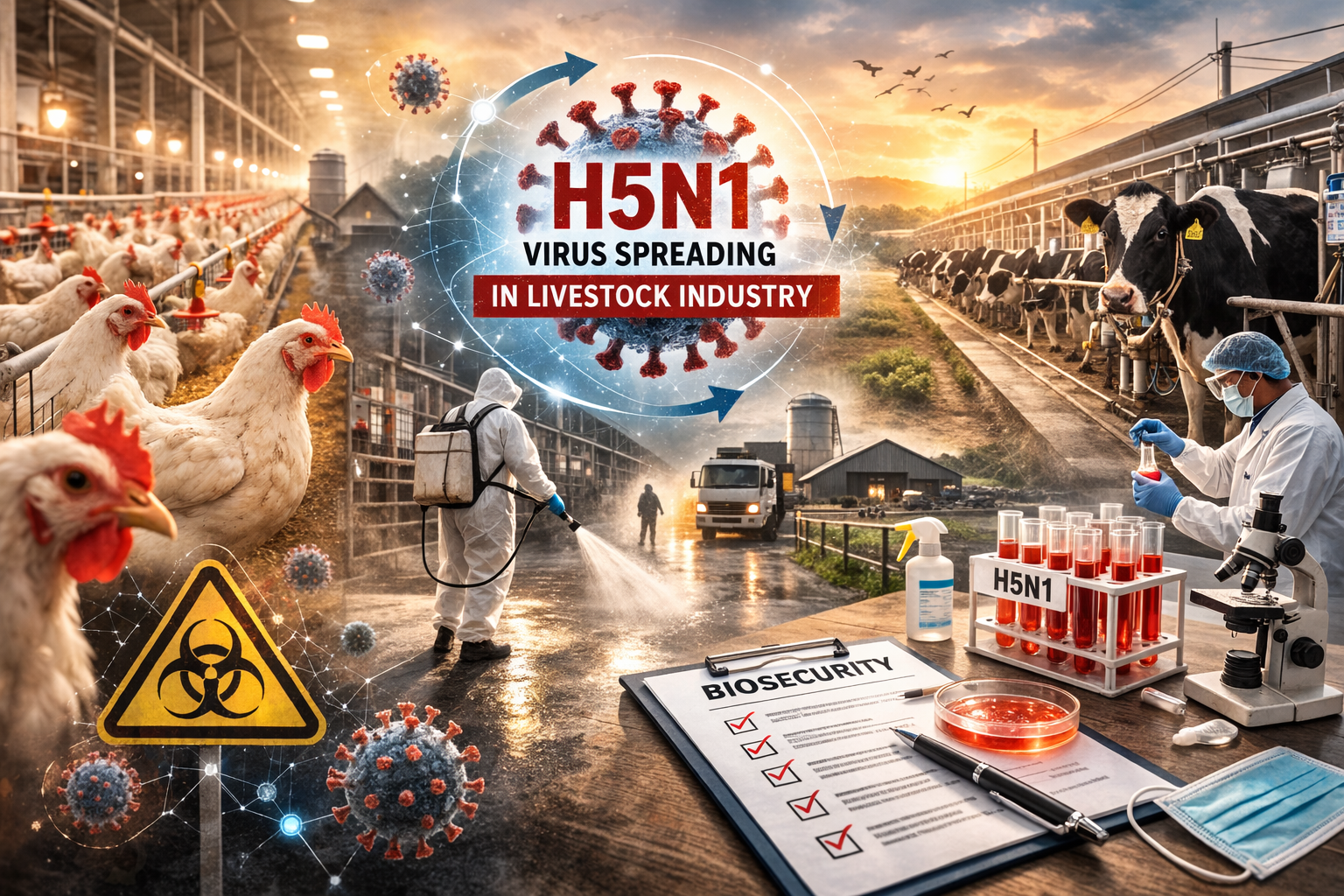
This shift is precisely what has made H5N1 a “hot” topic not only in veterinary medicine, but also in risk management, agricultural trade, food safety, and public health. When the virus was confined mainly to poultry, the livestock industry could treat it as a familiar battle: detection, containment, culling, disinfection, and restocking. But once the virus began appearing in dairy cattle and other mammals, the perspective had to change. WOAH has made it clear that current evidence suggests cow-to-cow transmission may occur through contact with virus-contaminated milk, aerosols, or indirectly through contaminated clothing and equipment. In other words, the focus of the fight is no longer simply about “keeping wild birds from bringing pathogens into farms,” but about controlling the entire chain of biological contact within modern production systems.
From an industrial production perspective, this is a significant shift. In large-scale livestock operations, efficiency is built on standardisation: stable animal flows, orderly feed and labour movement, and supply chains that operate almost continuously. Yet this very optimisation also creates a vulnerability. Once an infectious agent enters the system, the speed of spread and the scale of losses can rise in proportion to the size of production itself. Reuters reported on February 27, 2026, that in Pennsylvania alone, avian influenza wiped out 7.4 million chickens within a single month; across the United States, the outbreak since 2022 has removed around 196 million birds from the production chain. These are no longer isolated incidents, but pressures of systemic scale.
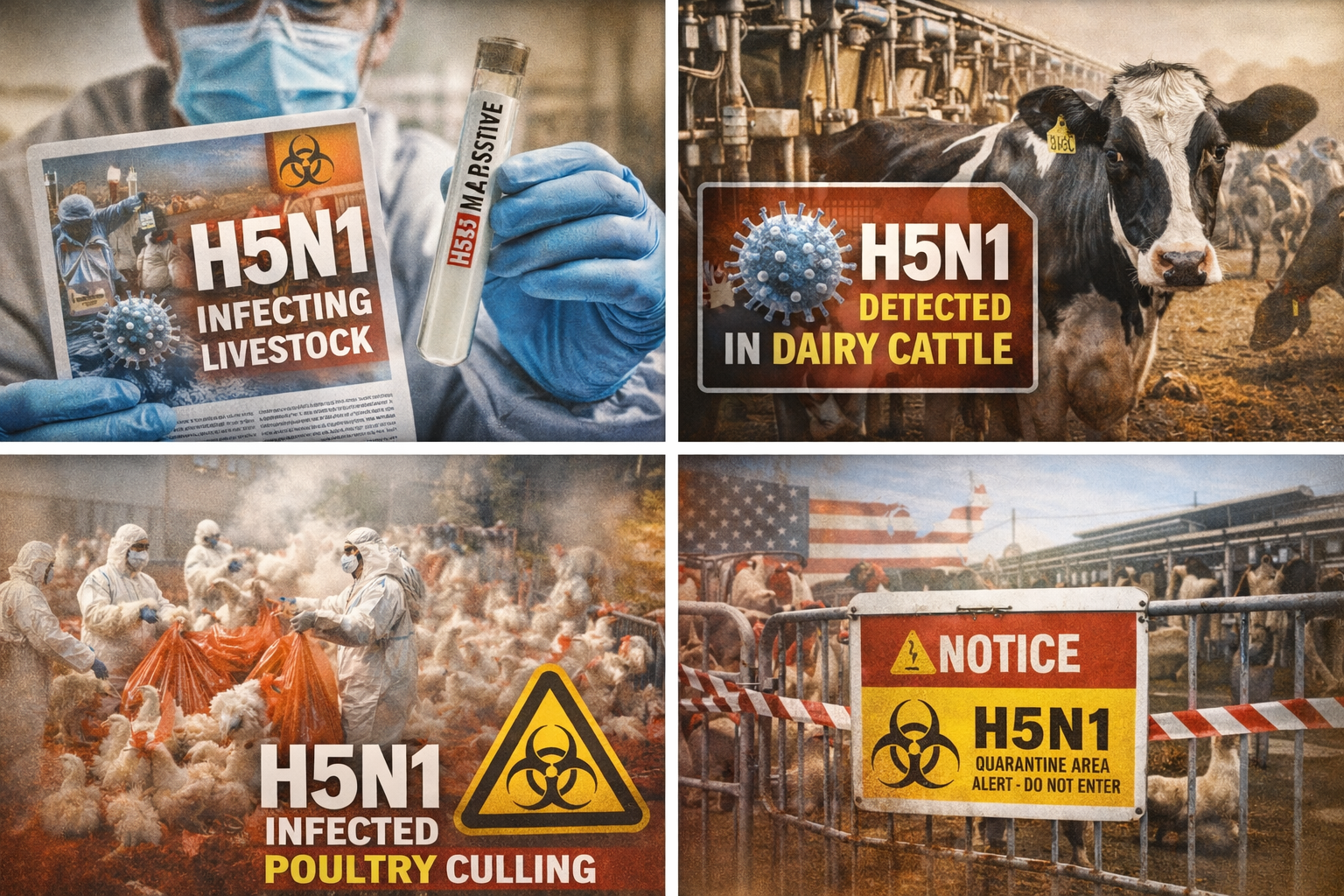
What is especially notable is that the threat of H5N1 now lies not only in mortality rates or the number of birds culled, but also in the prolonged uncertainty the industry must now face. In a January 2026 update, USDA APHIS stated that H5N1 is present in wild bird populations worldwide and is causing outbreaks in commercial poultry and dairy cattle in the United States. The agency also emphasised that the virus must now be monitored not only in commercial poultry and backyard flocks, but also in wild birds, livestock, and other animal species. This shows that the boundary between “a poultry disease” and “a cross-species disease” is rapidly becoming blurred.
From a business perspective, this marks a critical turning point. In the past, farms and livestock enterprises could focus primarily on productivity, feed costs, genetics, veterinary medicines, and market output. But in the current environment, biosecurity management is increasingly becoming a core competitive capability. A company with strong control systems for farm entry and exit, vehicle movement, surveillance sampling, sanitation procedures, farm zoning, and response protocols for suspected outbreaks will not only reduce epidemiological risks but also strengthen its credibility with partners, regulators, and customers. FAO has already issued guidance on H5N1 surveillance in cattle and farmed mammals in the context of clade 2.3.4.4b continuing to spread globally from wild birds to poultry and now to mammals, including cattle. The fact that FAO has had to release a dedicated set of recommendations for livestock surveillance shows that the nature of the challenge has fundamentally changed.
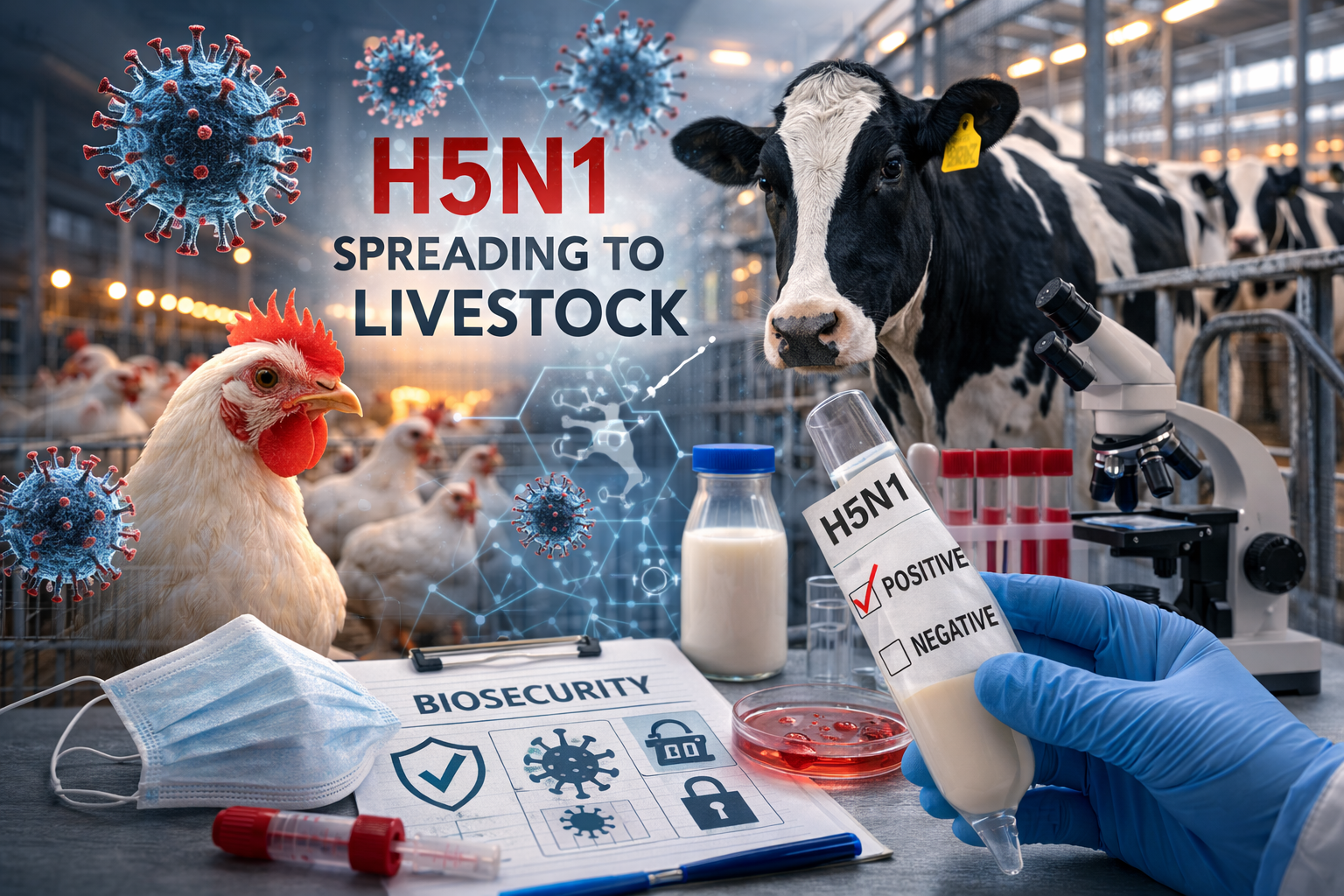
One critical point that must be clarified is that, according to WHO and WOAH, the current risk to the general public remains low. There is no evidence of human-to-human transmission in this context, and commercially pasteurised milk remains safe because pasteurisation can inactivate the virus. However, the higher-risk group includes people who have frequent, close, and direct contact with infected animals, such as farm workers, veterinarians, and field technicians. This means that in industrial livestock production, workforce management must also be reconsidered, including PPE and hand hygiene, sampling procedures, raw milk handling, and response training when disease is suspected.
Viewed more broadly, H5N1 is forcing the global industrial livestock industry to shift from a mindset of “fighting outbreaks when they occur” to one of “living with biological risk under a high level of control.” This is a significant change in management philosophy. Rather than treating biosecurity as a secondary expense, businesses must now see it as a mandatory investment, comparable to electricity, water, housing infrastructure, or feeding equipment. Rather than reacting only when cases appear, the industry must build capacities for proactive surveillance, early detection, transparent communication, and rapid coordination with veterinary authorities.
Therefore, if one asks what is currently one of the hottest topics in the global industrial livestock sector, the answer is not simply “H5N1 avian influenza.” More precisely, it is H5N1 as a new stress test for the entire biosecurity capacity, disease surveillance systems, and resilience of modern industrial livestock production. Anyone who sees this merely as another poultry outbreak is looking too narrowly. But those who understand it as a turning point in agricultural risk management will clearly see why the world is watching this issue so closely.