
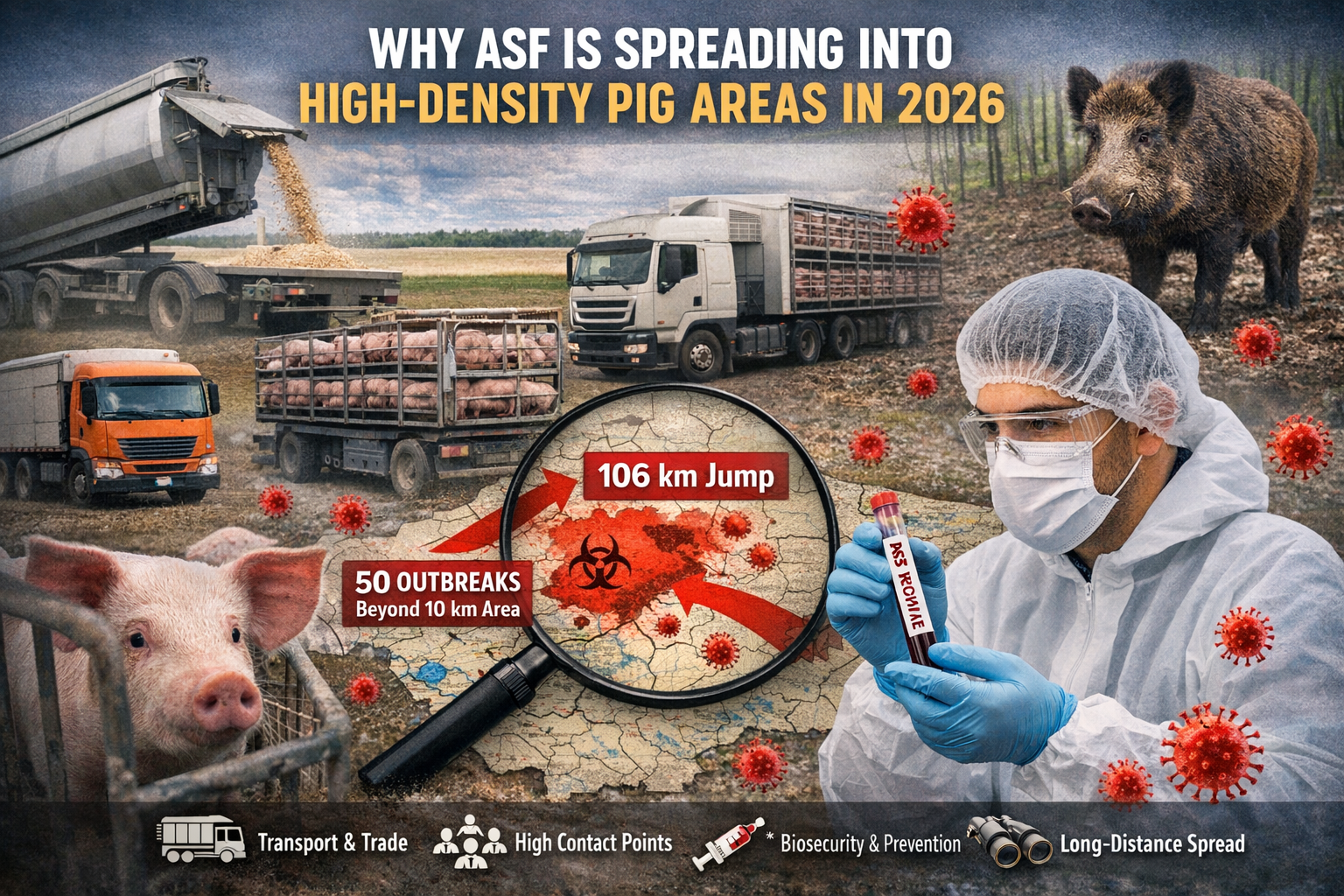
One of the most important data points in WOAH's February 2026 African Swine Fever report is that nearly 49–50% of outbreaks were recorded in areas with pig density above 10 pigs per square kilometre. This is not a minor technical detail. It is a strong signal of where the disease tends to strike, with the greatest impact on the livestock sector. When ASF emerges in high-density pig production areas, its consequences are not limited to a single farm. The disease can quickly become a risk to entire farming clusters, feed mills, slaughterhouses, transport systems, and livestock traders.
From a practical production perspective, high pig density means a constant increase in "contact points": feed delivery trucks, pig vehicles, farm workers, shared tools, breeding stock movements, and the continuous flow of supplies. Once one weak point is left uncontrolled, ASF can spread rapidly throughout the surrounding area. This is why companies operating in Animal Medicines Vietnam and Veterinary Medicines Vietnam need to rethink their market approach. It is no longer enough to offer only supportive or treatment-related products; they must also provide guidance on comprehensive biosecurity systems.
The report also notes that in February 2026, 50 outbreaks occurred outside a 10 km radius of previously affected areas. Nepal recorded an epidemiological "jump" of approximately 106 km from the nearest previously reported outbreak. This is extremely important because it proves that ASF does not always spread gradually from one neighbouring point to another. In some cases, it appears suddenly at a considerable distance, most likely linked to transportation, trade, human activity, or contaminated materials. For the livestock industry, this means geographical distance alone should never be considered a guarantee of safety.
The chart on page 5 presents another worrying paradox. While outbreaks in domestic pigs declined during part of the period, outbreaks in wild animals increased again, and January 2026 marked the highest level since early 2022. This suggests that even when commercial farms improve internal controls, disease pressure from surrounding environments can still trigger new waves of infection. In other words, if the interface between livestock production, the environment, and wild animal populations is not properly managed, ASF will remain a prolonged threat.
For any Veterinary Medicines Exporter or Animal Medicines Exporter, this context should strongly influence brand positioning and market messaging. International customers increasingly care about a supplier's prevention capacity, technical transparency, and field support. A company involved in Veterinary Medicines Manufacture or Animal Medicines Manufacture is not judged only by its product portfolio, but also by whether it can help partners reduce disease risks in real-life farming systems. That is why SEO content and industry communication should emphasise themes such as biosecurity, herd monitoring, farm training, disinfection protocols, and risk management practices.
The WOAH report also confirms that during the reporting period, no country or territory officially reported the use of vaccination in pigs as an outbreak response measure, which means that the most critical pillars of control remain preventing virus entry, ensuring early detection, and enabling rapid response. This is a very practical lesson for farmers. In high-density pig regions, the greatest mistake is not a lack of medicines, but delayed detection and weak control over movement pathways.
In summary, ASF is more dangerous in high-density pig farming areas because these regions concentrate all the factors that can magnify losses. To stay ahead of the risk, the livestock sector must shift from a "responding after an outbreak" mindset to "managing risk before the disease arrives." This also creates an opportunity for Veterinary Medicines Vietnam and Animals Medicines Vietnam to strengthen their role as long-term technical partners for farmers and the broader livestock value chain.