
In Vietnam, over 80% of the population still relies on agriculture as their main livelihood, and livestock farming plays a crucial role in rural income. However, most farmers — especially in mountainous and remote areas — continue to raise animals on a small household scale, using agricultural by-products such as corn, cassava, and vegetables as feed.
The challenge lies in the waste generated from livestock production, which releases large amounts of CO₂, CH₄, and NH₃ gases — all contributing to the greenhouse effect and severe environmental pollution. This not only affects public health but also reduces productivity and increases the risk of disease outbreaks among animals.
Experts in Animals Medicines Vietnam have emphasized that sustainable livestock development must combine biological and technological solutions to reduce emissions while improving feed efficiency and animal health.
To address these environmental issues, the Ha Hoa Agricultural and Rural Development Cooperative (HaDevA, Phu Tho province) initiated a project titled:
“Reducing Environmental Impacts and Climate Change through the Use of Active Probiotics in Animal Feed and Waste Treatment.”
The project was piloted in three highland communes — Phu Nham, Hanh Son, and Son A (Yen Bai province) — and has shown promising results in reducing pollution and enhancing livestock productivity.
According to recent reports, many Veterinary Medicines Manufacture companies in Vietnam have started to integrate biotechnology into their production lines, developing biological additives such as probiotics, enzymes, and microbial agents to enhance digestion and promote eco-friendly livestock systems.
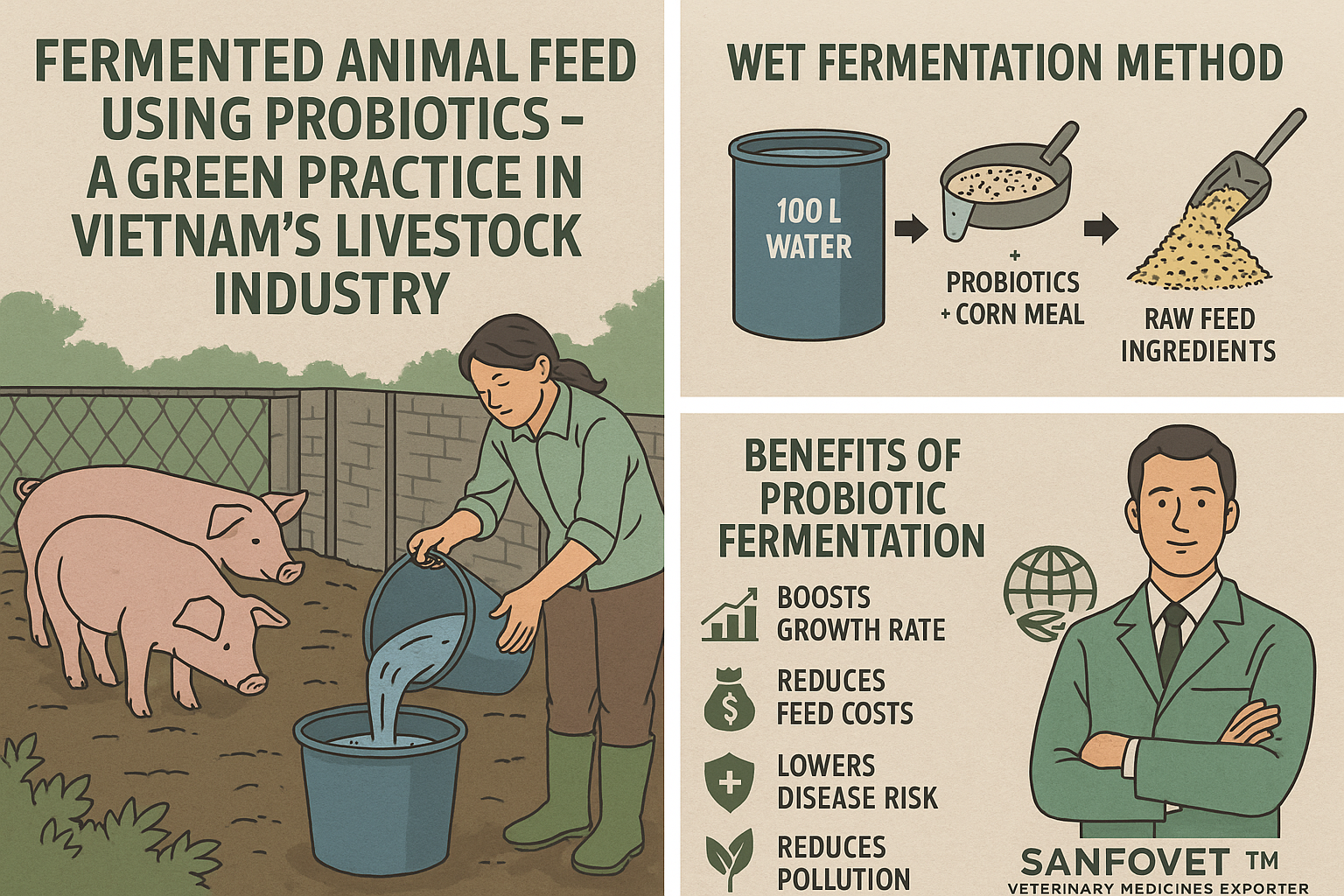
The project introduced two primary fermentation techniques for animal feed: wet fermentation and semi-dry fermentation.
This approach is simple, cost-effective, and ideal for small-scale farmers.
Procedure:
Mix 0.5 kg of active probiotic culture and 4 kg of corn flour or bran into 100 liters of clean water.
Stir thoroughly and let the mixture rest for one hour.
Add 96 kg of feed ingredients (such as bran or corn flour) gradually into the probiotic water until the surface is slightly covered.
Leave the container partially open for 4–5 hours, then seal tightly and ferment in a warm area for 24–48 hours depending on temperature.
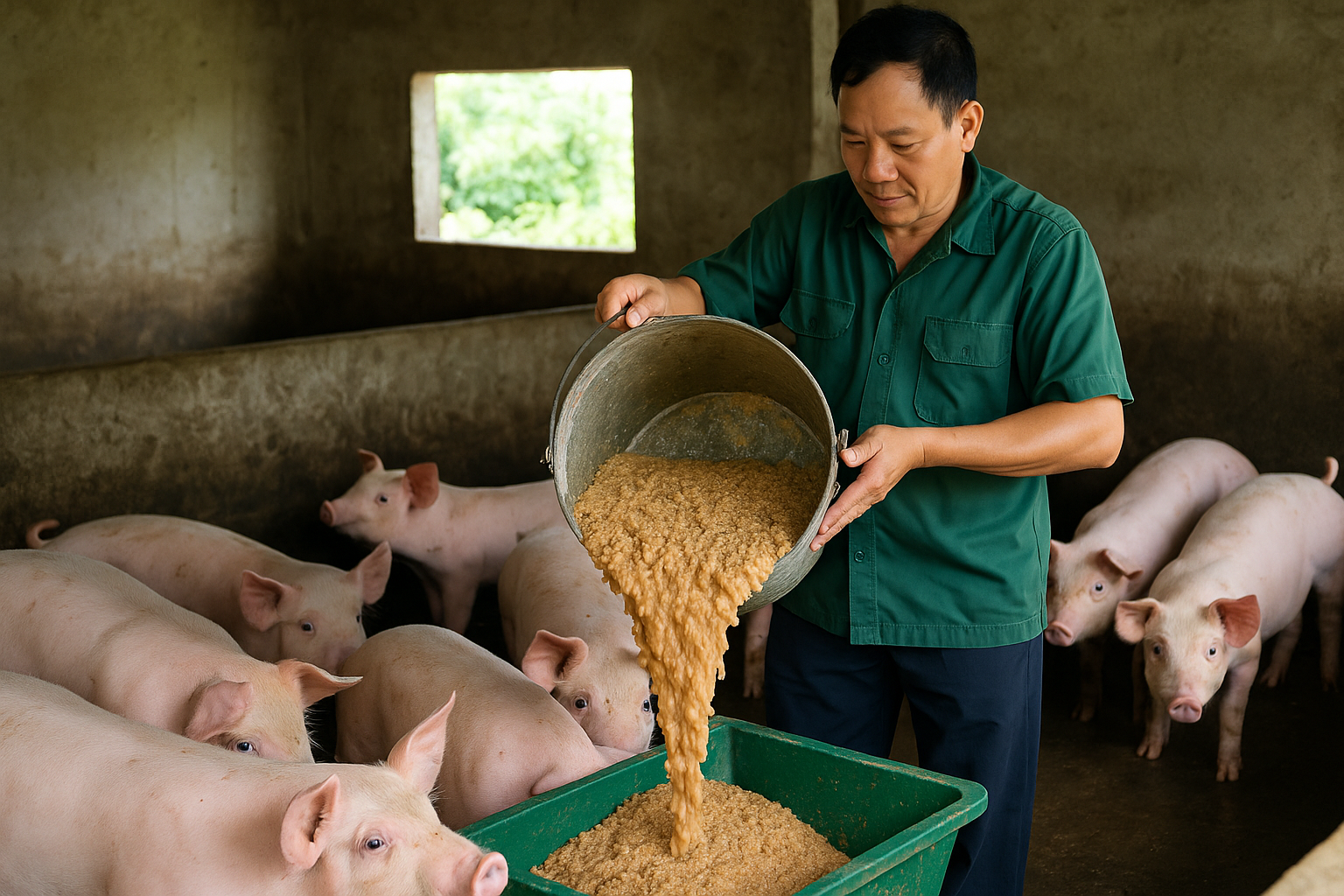
When the fermented feed emits a pleasant sour aroma, it is ready for use. Typically, 100 kg of raw feed produces about 200 kg of high-quality fermented feed that is rich in nutrients and easy to digest.
This method is suited for larger farms and industrial-scale feed processing.
Procedure:
Combine 100 kg of corn or bran and mix lightly.
Prepare probiotic water with 0.5 kg probiotics, 2 kg bran, and water.
Mix until the texture becomes moist and crumbly, then transfer to lined plastic bags or containers.
Keep the opening loose for 5–6 hours, then seal tightly.
Ferment for 24–48 hours depending on ambient temperature.
The result is 135–140 kg of semi-dry fermented feed that has a fragrant, slightly sour smell, stimulating appetite and improving feed conversion efficiency.

The HaDevA project demonstrated significant benefits after applying the probiotic fermentation model:
Faster Growth Rate: Pigs grew healthier, with more uniform weight gain.
Reduced Feed Costs: Farmers saved 20–30% on feed expenses by using locally available materials.
Cleaner Environment: Animal waste became odorless and could be used directly as organic fertilizer.
Lower Disease Incidence: Beneficial microbes improved gut health, reducing digestive diseases.
Experts from leading Animals Medicines Manufacture organizations confirmed that probiotic fermentation technology enhances meat quality, while contributing to Vietnam’s broader green agriculture strategy.
The success of this biological fermentation model opens new opportunities for enterprises in Veterinary Medicines Vietnam, where the integration of probiotics, biological agents, and safe veterinary products forms a complete value chain — “From Farm to Clean Product.”
Many Veterinary Medicines Exporter companies in Vietnam are now adopting biotechnology to minimize antibiotic residues and strengthen their reputation in global markets.
Meanwhile, collaborations between Animals Medicines Exporter enterprises and local agricultural cooperatives have helped spread these sustainable livestock models, increasing income and promoting cleaner production for rural communities.
To scale up this initiative, support is needed from government agencies, research institutes, and private enterprises within the Veterinary Medicines Manufacture sector. Developing domestic probiotic and enzyme production will help reduce import dependency and lower costs for farmers.
Equally important is training farmers on proper fermentation techniques, feed storage, and how to combine these methods with products from Animals Medicines Vietnam for disease prevention and animal care.
Enterprises like Sanfovet, a pioneering Animals Medicines Manufacture, are playing a vital role in expanding the application of biotechnology in Vietnam’s agriculture — moving toward a cleaner, low-emission, and sustainable livestock industry.
With over two decades of experience, Sanfovet stands as a trusted Veterinary Medicines Exporter certified by GMP-WHO, supplying veterinary drugs and nutritional supplements to more than 30 countries.
Sanfovet’s product range includes antibiotics, vitamin formulations, probiotics, and feed additives — all developed under strict international standards for efficacy, safety, and environmental responsibility.
Furthermore, Sanfovet collaborates with multiple Animals Medicines Exporter partners in the Middle East, South Asia, and Africa, strengthening the global presence of Veterinary Medicines Vietnam and promoting the excellence of “Made in Vietnam” veterinary products worldwide.
The fermented animal feed model using active probiotics represents a breakthrough in Vietnam’s sustainable livestock transformation. It provides clear economic advantages for farmers, improves animal welfare, and contributes to environmental protection.
As a pioneer in Veterinary Medicines Manufacture, Sanfovet remains committed to innovation, research, and partnership with farmers — fostering a future where Vietnamese agriculture grows greener, cleaner, and more efficient.