
How Does Heat Stress Affect Chickens?
The initial signs of heat stress can be easy to recognize, including panting, increased water consumption, reduced feed intake and lethargy. However, the physiological consequences can extend well beyond these visible symptoms.
As feed intake declines, the supply of essential nutrients to the body is reduced. At the same time, prolonged panting can contribute to disturbances in electrolyte and acid–base balance. Together, these changes can negatively affect:
• Growth rate and feed efficiency
• Production performance
• Hydration and electrolyte balance
• Intestinal function and nutrient utilization
• Immune response
• Overall flock health and uniformity
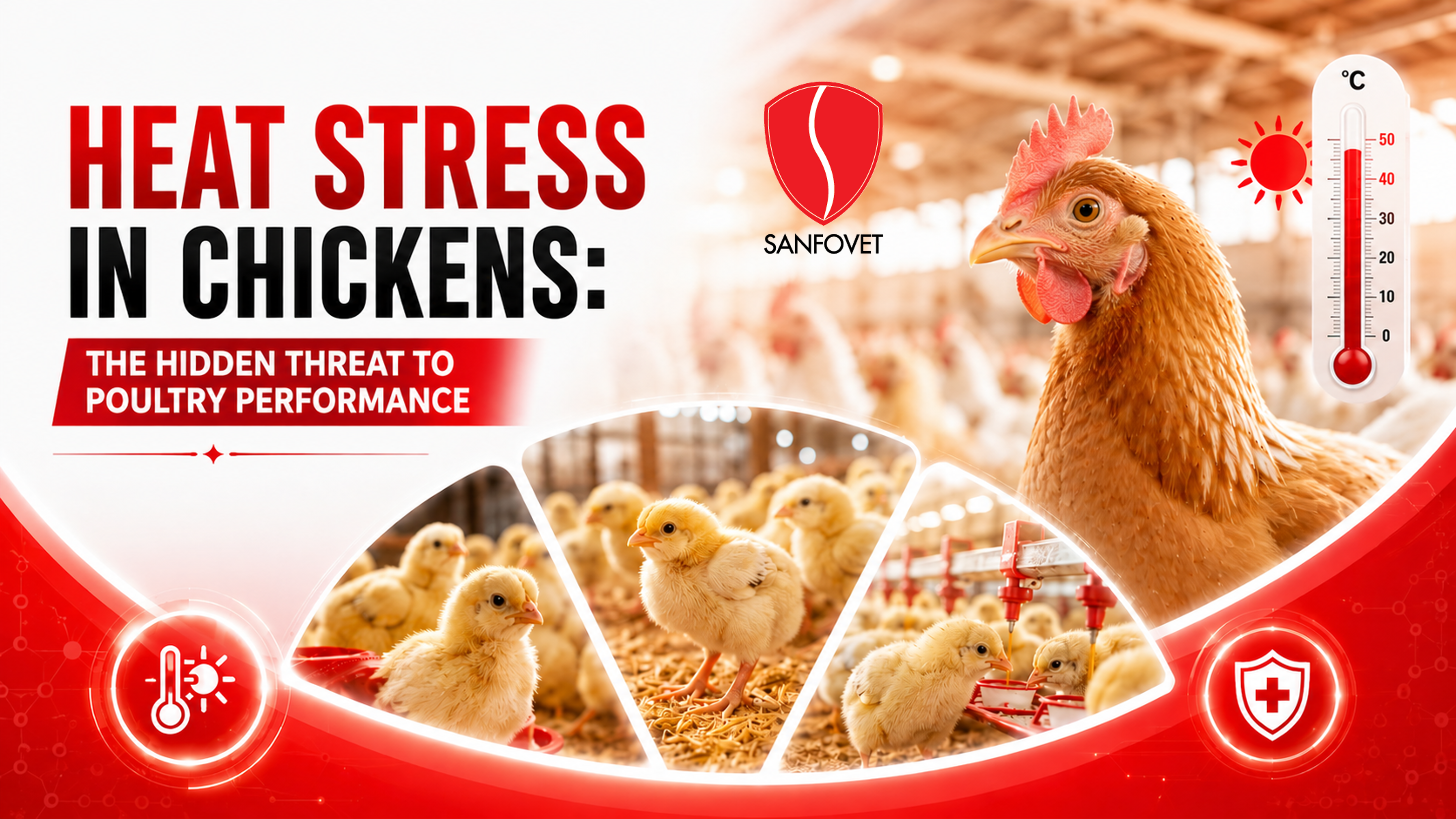
Under severe or prolonged heat stress, birds may experience dehydration, marked reductions in productivity and increased mortality. These effects can ultimately lead to significant economic losses for poultry producers.
Why Is Heat-Stress Prevention Important?
Managing heat stress is not simply a matter of treating visible symptoms. Effective control requires a preventive, multifaceted approach that combines environmental management, reliable water supply, nutritional support and continuous flock monitoring.
Taking action before environmental conditions become critical can help reduce the physiological burden on birds and maintain flock performance throughout periods of high heat.
Practical Solutions for Heat-Stressed Chickens
1. Improve Ventilation
Adequate ventilation and air movement are essential for reducing heat and humidity inside the poultry house. During periods of extreme heat, effective airflow can enhance evaporative heat loss and help birds dissipate body heat more efficiently.
Ventilation systems should be regularly checked to ensure that air movement is appropriate throughout the house and that areas with poor airflow are minimized.
2. Ensure Continuous Access to Clean Water
Water consumption can increase substantially during hot weather as birds attempt to maintain hydration and regulate body temperature.
Provide clean, fresh water continuously and ensure that the drinking system delivers adequate water flow throughout the house. Regular inspection and maintenance of drinker lines, nipples and water quality are essential, particularly during periods of high environmental temperature.
3. Support Electrolyte Balance
Heat stress increases panting, which can alter the birds’ acid–base status and contribute to electrolyte disturbances.
Appropriate electrolyte supplementation, when indicated, can support hydration and electrolyte balance during periods of heat stress. Nutritional interventions should be selected and applied according to the flock’s condition and overall management program.
4. Provide Nutritional Support
Reduced feed intake during heat stress can limit the intake of essential nutrients precisely when birds are experiencing increased physiological demands.
Appropriate nutritional support, including vitamins, minerals and other functional nutrients, may help support normal metabolism, intestinal function and immune response. Nutritional strategies should complement—not replace—effective environmental and water management.

5. Monitor the Flock Closely
Early detection allows producers to respond before heat stress causes substantial losses.
Key indicators to monitor include:
• Panting and abnormal respiratory behavior
• Water consumption
• Feed intake
• Body weight and growth rate
• Mortality
• Flock uniformity
• Production performance
Changes in these parameters can provide valuable early warning signs that environmental heat is beginning to affect flock health and productivity.
Protecting Poultry Performance Starts with Prevention
Heat stress is more than a temporary response to hot weather. If poorly managed, it can affect feed intake, growth, feed efficiency, immunity, flock uniformity and overall production performance.
A successful heat-stress management program should therefore combine effective ventilation, continuous access to clean water, appropriate nutritional support and close flock monitoring.
By implementing preventive measures before environmental conditions become critical, poultry producers can help minimize the impact of heat stress and maintain healthier birds, more consistent performance and greater productivity throughout the hot season.
SANFOVET – Supporting Healthier Poultry, Stronger Performance.