
Peafowl farming has gained increasing attention in Vietnam and across Asia due to the bird’s exceptional ornamental value, cultural significance, and growing economic potential. Peafowl are no longer raised solely for aesthetic purposes but have become an integral part of eco-tourism, conservation breeding, and high-value ornamental livestock systems.
To achieve long-term success, peafowl farmers must understand biological characteristics, housing requirements, nutritional needs, reproductive behaviour, and—most importantly—disease prevention strategies. With the advancement of animal health solutions and professional support from Veterinary Medicines Vietnam, peafowl farming is gradually shifting toward a more sustainable, science-based model.

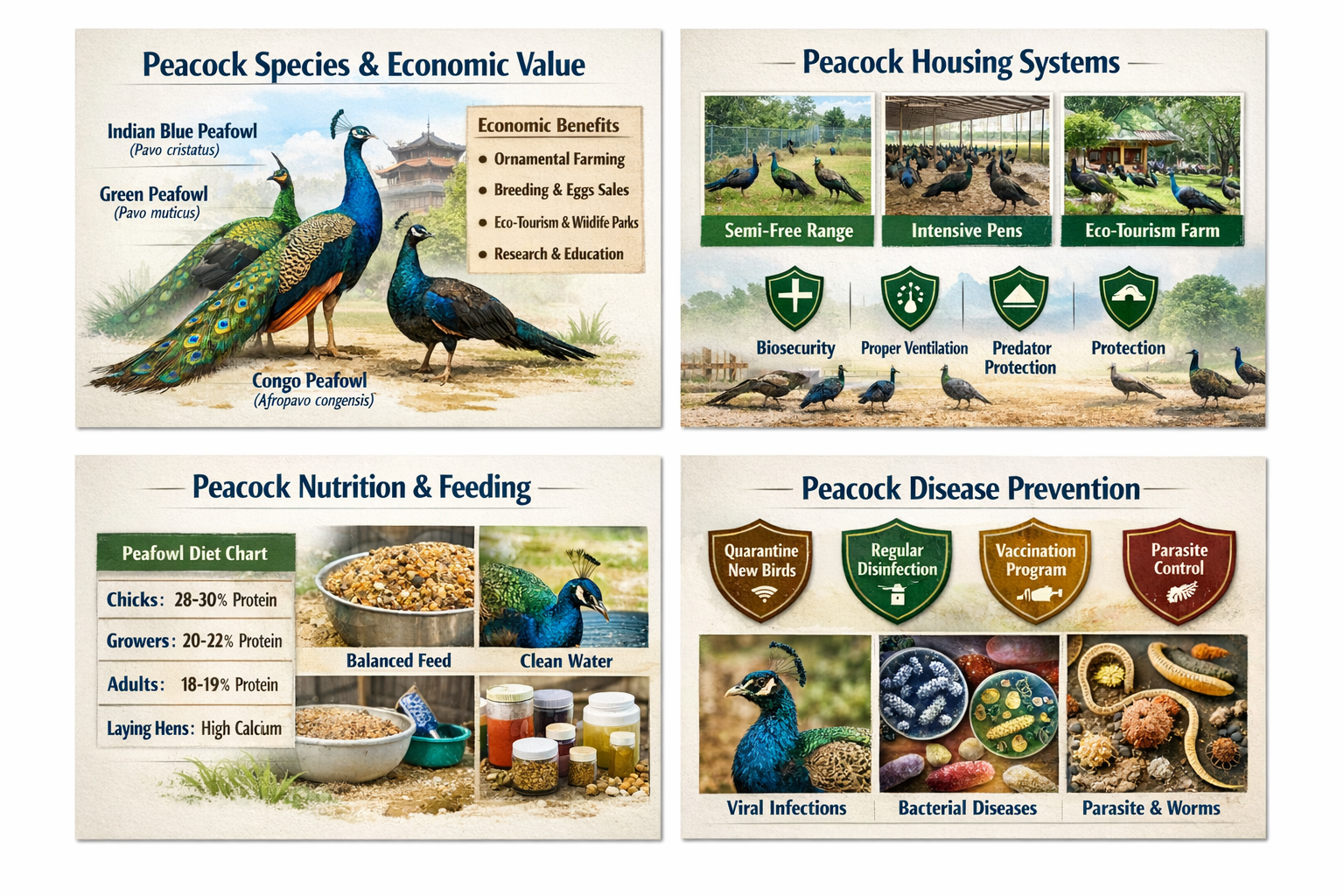
Peafowl belong to the family Phasianidae and include three primary species:
Among these, Pavo cristatus is the most suitable for commercial and semi-commercial farming due to its resilience and stable breeding performance.
Peafowl symbolise prosperity, nobility, and purity in many Asian cultures. In Vietnam, they appear in royal architecture, temple carvings, and traditional art. Economically, peafowl generate income through:
With proper health management supported by Animals Medicines Vietnam, peafowl farming can become a stable, long-term investment.
Adult peacocks weigh 4–6 kg and may exceed 2 meters in total length, including the tail train. The iconic tail consists of 200–250 elongated feathers with iridescent eye-spots used during courtship. Peahens are smaller, lack long tail feathers, and have cryptic colouration for nesting camouflage.
Peafowl possess excellent vision and hearing, a strong cardiovascular system, and the ability to fly short distances; they often roost at elevated positions during the night.
Peafowl mature more slowly than chickens but have a much longer lifespan—up to 20–25 years under good management. Sexual maturity typically occurs around the age of 2. At the same time, males usually display full ornamental plumage by the third year of age.
Moulting occurs after the breeding season and requires a diet rich in adequate protein, amino acids, vitamins, and minerals. Nutritional support during this phase is essential for feather regeneration and immune resilience.

Peafowl thrive in warm, dry climates with temperatures between 20 °C and 32°C and humidity below 70%. Low temperatures and excessive moisture increase susceptibility to respiratory diseases.
Quiet surroundings, minimal human disturbance, and protection from predators are essential for welfare and productivity.
In all systems, biosecurity and hygiene are critical, particularly when farm scale increases and disease risks intensify.
StageCrude Protein
Chicks (0–6 weeks) 28–30%
Growers 20–22%
Adults (maintenance) 18–19%
Laying peahens increased calcium (2.5–3.5%)
Protein deficiency leads to feather loss, poor immunity, and reduced egg production, while energy imbalance may cause obesity and infertility.
Commercial poultry or pheasant feeds are recommended for balanced nutrition. Homemade rations may include grains, plant protein, animal protein, greens, and mineral-vitamin premixes.
Clean water is essential. Each bird consumes approximately 0.5 to 1 litre of water per day. Supplementing with electrolytes, probiotics, and vitamins can improve stress tolerance and digestive health.
Many farms integrate solutions developed by animal medicine manufacturing facilities to enhance nutrient absorption and reduce disease pressure without overreliance on antibiotics.
Peafowl are polygynous. One male typically mates with 3–5 females. The breeding season occurs from April to August under favourable conditions.
Peahens lay 4–12 eggs per clutch. Incubation lasts approximately 28 days. Artificial incubation allows better scheduling and hatch rate control when managed correctly.
Standard incubation parameters:
Chicks require high-protein starter feed, warm brooding conditions, and clean water. Early disease monitoring is crucial during the first 8 weeks.
Working with professional veterinary medicine exporters helps farms access reliable preventive solutions and technical support.
Preventive health programs, vaccination where applicable, and regular parasite control are more effective than treatment alone.

A significant proportion of peafowl mortality results from physical injuries caused by panic flight, collisions, or predator attacks. Farms should use high enclosures, eliminate sharp edges, secure wiring, and maintain calm surroundings to minimise accidents.
Successful peafowl farming requires a comprehensive approach that integrates biological understanding, proper housing, balanced nutrition, controlled breeding, and proactive disease prevention. As Vietnam continues to strengthen its animal health industry and global distribution capacity, collaboration with reliable partners, such as Veterinary Medicines Vietnam and related export networks, enables farmers to build resilient, high-value, and sustainable peafowl production systems.