
Moisture content in pelleted feed is widely recognized as one of the most significant factors influencing feed quality, nutrient availability, and livestock productivity. As global livestock production intensifies, the interaction between feed technology, nutrition, and animal health has become more significant than ever. This topic is also frequently highlighted in the regulatory frameworks associated with Veterinary Medicines Vietnam, where feed stability and nutrient retention are crucial to animal health outcomes.
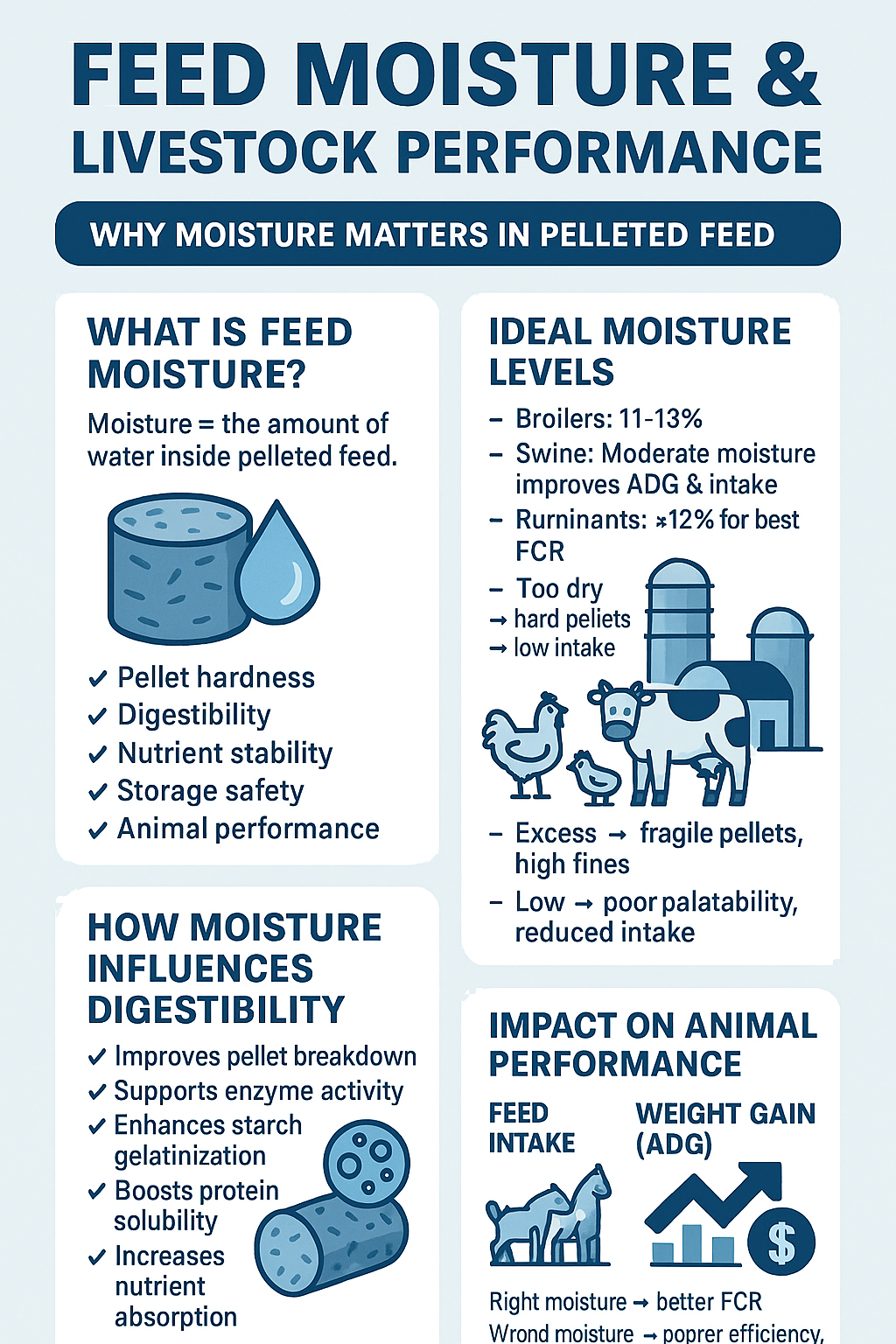
Feed moisture affects pellet hardness, structural durability, digestibility, storage stability, microbial safety, and the overall performance of livestock species. When moisture is managed correctly, pelleting efficiency improves, nutrients are better preserved, and animals exhibit higher feed intake, superior weight gain, and optimal feed conversion ratio (FCR). Conversely, poor moisture management can lead to nutrient loss, mould contamination, reduced pellet durability, and decreased performance.
This comprehensive 1500-word article examines the science behind feed moisture, its effects on livestock performance, and practical recommendations for feed mills and farmers. It also emphasizes industry standards commonly referenced in sectors such as animal medicines and international livestock nutrition systems.
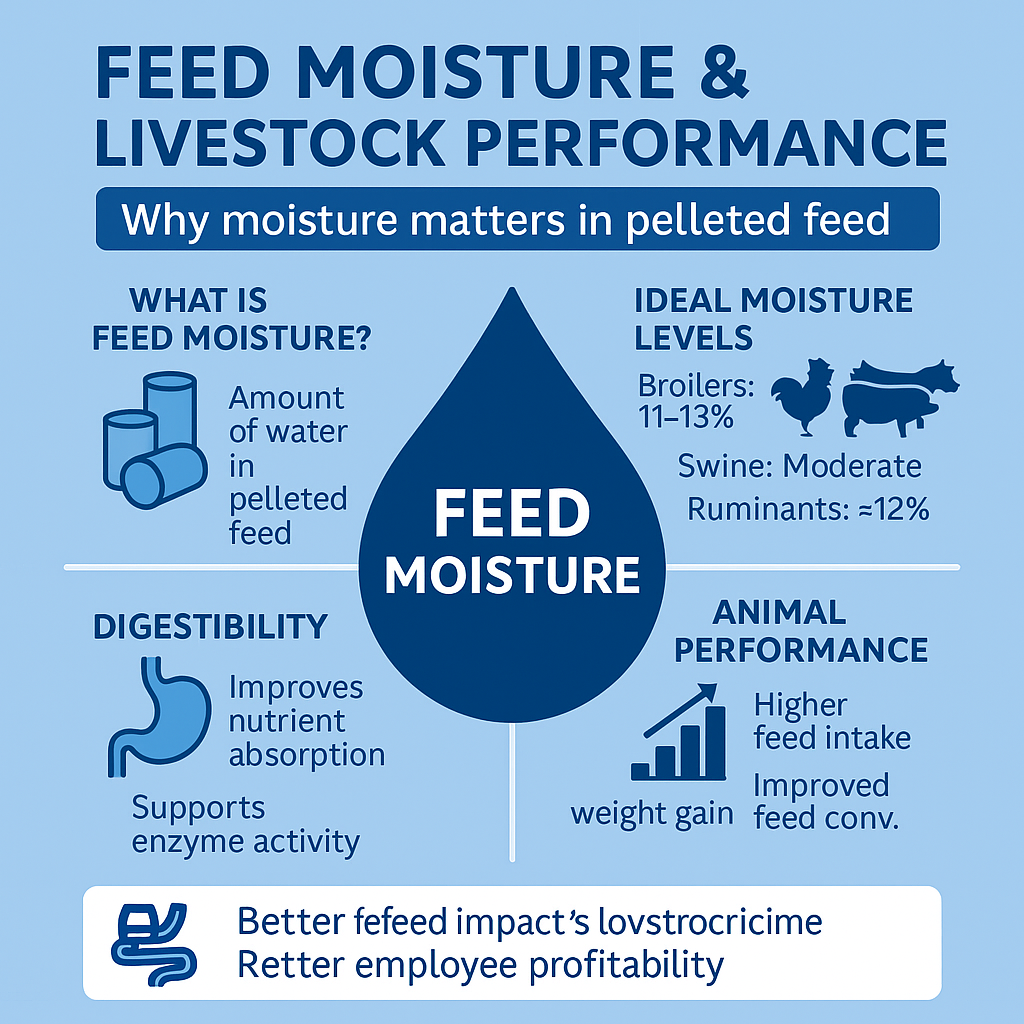
Moisture appears simple on the surface, yet it is one of the most critical physical properties determining pellet quality. The moisture level impacts pellet formation, density, durability, and breakdown behaviour inside the gastrointestinal tract.
Moisture acts as a lubricant and binding agent during pelleting. Adequate moisture helps:
Insufficient moisture results in:
Excessive moisture, however, creates conditions that promote mould growth, heat damage, and nutrient loss — issues closely monitored by quality teams in many Veterinary Medicines Exporter facilities before shipments to international markets.
Once consumed, pellets must break apart efficiently. Moisture influences:
Higher moisture generally enhances digestibility, but it must be balanced to prevent spoilage. These digestion-related effects are also considered in quality evaluation systems within Animal Medicines Exporter organizations that focus on performance consistency across species.
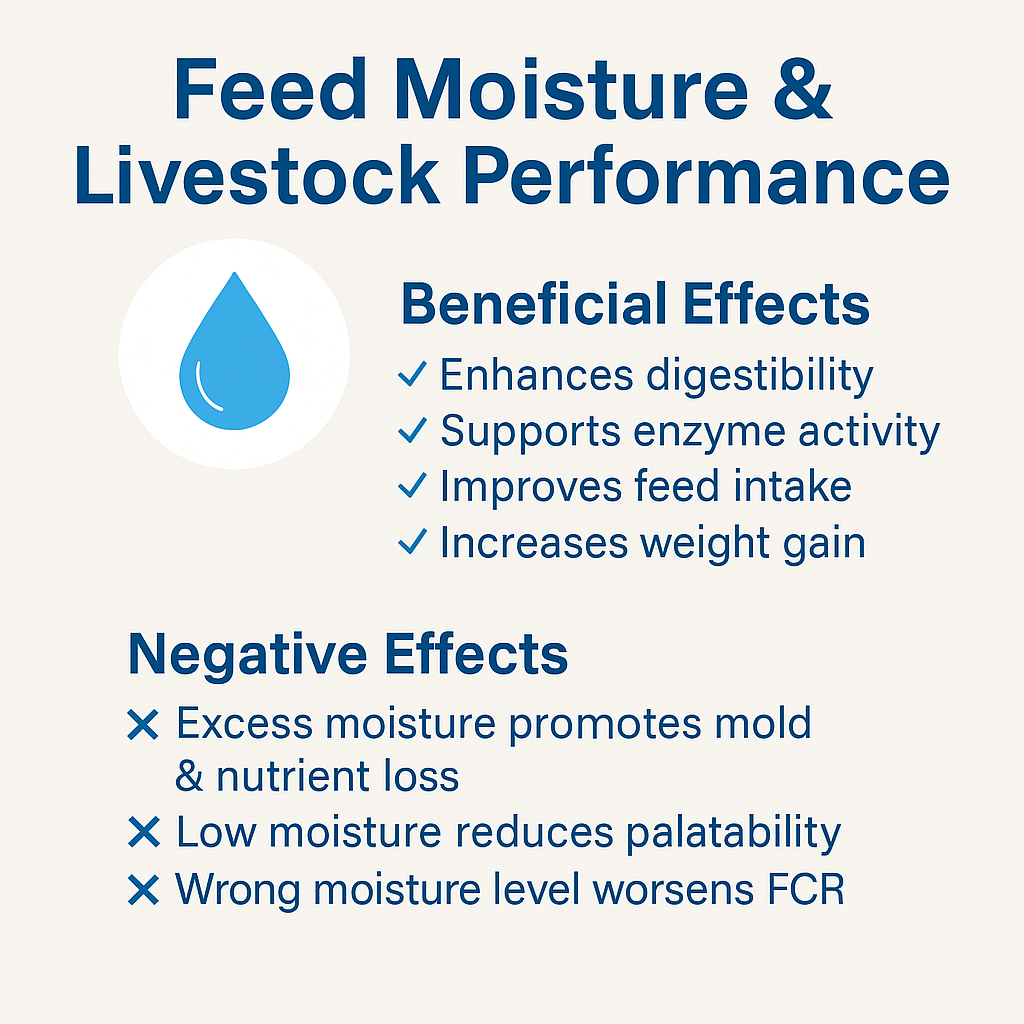
Different livestock species exhibit distinct digestive behaviours, necessitating tailored moisture levels accordingly.
Poultry have a rapid digestive transit time, so pellet moisture is crucial for the rapid release of nutrients. Moderate moisture:
Dehydrated pellets reduce feed intake, while overly moist pellets risk mould contamination — a concern shared across many Veterinary Medicines Manufacturing regulatory systems.
Swine diets contain more fibre and protein, requiring pellets that disintegrate at the correct rate. Moisture benefits pigs by:
Research shows pigs fed pellets at optimal moisture levels outperform those fed overly dry diets in both feed intake and growth rate.
Ruminants can tolerate a broader range of moisture due to their complex digestive system. However:
Maintaining moisture at approximately 12% post-pelleting is linked with optimal FCR in dairy and beef cattle — a benchmark also used by multiple Veterinary Medicines Exporter operations supplying large-scale farms.
Moisture influences pellet palatability. Studies on broilers demonstrate:
Similar advantages apply to swine, where moderate moisture levels result in a stronger appetite and higher overall performance.
Improved digestibility and higher feed intake naturally lead to improved ADG. In commercial farms, even a slight increase in moisture optimization can produce:
These outcomes align with contemporary nutrition programs monitored in Animal Medicine Manufacturing, where feed synergy with animal health products is essential.
FCR is one of the most critical metrics for profitability. Moisture affects FCR directly:
Maintaining ideal moisture is therefore essential for economic success, particularly in export-oriented farms that also comply with Veterinary Medicines Exporter guidelines.

Steam conditioning determines:
Improper steam levels → unstable pellets → inconsistent performance. This stage directly affects compliance standards in Animal Medicines Vietnam, where feed consistency is a core quality requirement.
After pelleting:
Cooling must reduce moisture to stable levels before storage — a crucial process also referenced by Veterinary Medicines Manufacturing facilities.

Environmental humidity can cause pellets to reabsorb moisture. Improper storage leads to:
To prevent this, warehouses must maintain:
Excessive feed moisture is the primary driver of mould growth. Mould produces:
These toxins:
This is why mould inhibitors are widely utilized in livestock industries and applied in various Veterinary Medicines Vietnam quality assurance programs.
From raw materials → conditioning → pelleting → cooling → storage.
They:
This is standard practice in facilities aligned with Animal Medicines Manufacturing guidelines.
Avoid excessive steam; target the ideal moisture-to-heat ratio.
Counterflow coolers or automated moisture-control technologies can maintain ideal moisture levels with higher reliability.
Low-humidity warehouses ensure pellet stability throughout shelf life.
Including:
These practices also support compliance for companies operating in animal medicines Exporter markets.
Moisture is not merely a number; it is a driving force behind feed efficiency, nutrient delivery, animal growth, and long-term farm profitability. When optimized, it enhances feed intake, digestion, FCR, and productivity across all livestock species. When mismanaged, it leads to spoiled feed, nutrient degradation, and a loss of performance.
In a global livestock industry increasingly connected with systems such as Veterinary Medicines Vietnam and international regulations involving Veterinary Medicines Manufacture, moisture control is no longer optional — it is essential.
By integrating moisture management into feed production, cooling, storage, and farm-level monitoring, livestock producers can significantly enhance animal health, optimize performance, and achieve sustainable economic benefits.